
Getting a Federal Firearms License (FFL) is easier than many people think, but there are specific federal, state, and local requirements you must meet before ATF will give you a license.
At the federal level, you generally must be at least 21 years old, be legally permitted to possess firearms and ammunition, have a location where you can conduct your FFL activities, comply with applicable state and local laws at that location, and intend to engage in a firearms business.
You do not need a traditional gun store, an LLC (however, I recommend that you use one), prior firearms-industry experience, or even a commercial business location. In fact, many FFLs operate from their homes.
In this guide, we'll break down the FFL requirements for both individuals and businesses, including personal eligibility, business intent, location and zoning requirements, and even some state and local considerations.
If you're looking for the entire process rather than just the requirements, see our Get Your FFL Guide for the complete roadmap from deciding whether an FFL is right for you all the way through how to get your license.
FFL Requirements at a Glance
| FFL Requirement | Absolutely Necessary? |
|---|---|
| At least 21 years old? | Yes |
| Legally permitted to possess firearms? | Yes |
| U.S. citizenship/legal qualifying status | Yes |
| Business premises (can be home) | Yes |
| Commercial Storefront | No |
| LLC or Corp | No |
| Zoning compliance | Yes |
| Prior firearms-industry experience | No |
| FFL Course | No |
| Business intent | Yes |
What is an FFL?
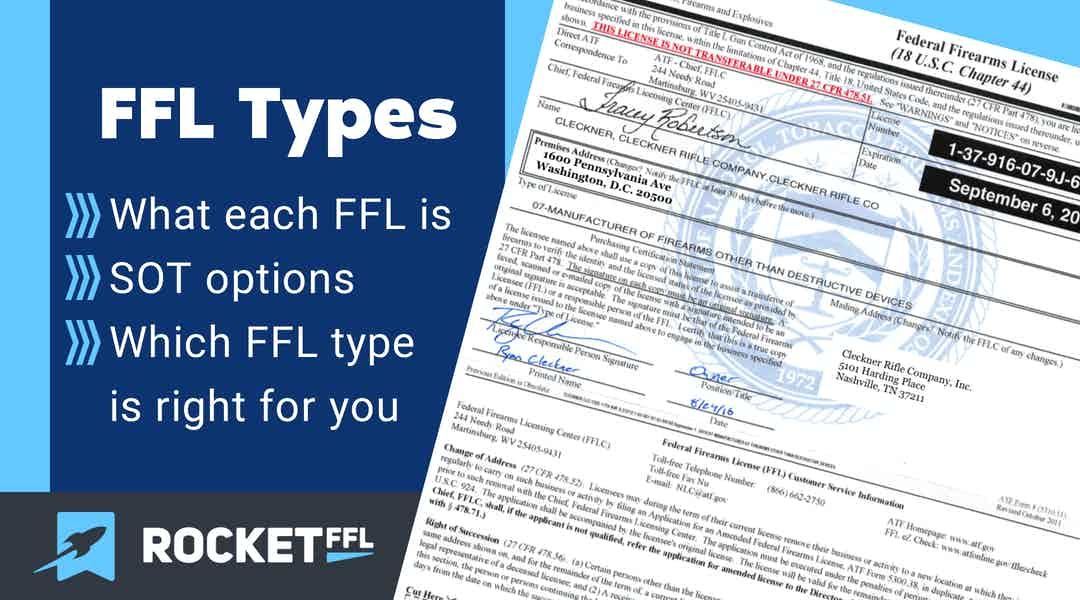
Having an FFL license means that someone may engage in the business of buying, selling, and/or making firearms.
Depending on which of the FFL license types you get, guns can be purchased and sold as part of a business, guns can be manufactured for sale, and/or firearms can be imported. Each type has its own fee (see FFL license cost by type).
If you also become an SOT, you can be a firearm dealer or manufacturer that works with NFA firearms like silencers (suppressors), short barreled rifles (SBR), machine guns, and more.
You don't need to be a full-fledged FFL dealer or manufacturer, you can have an FFL just to make money on an ffl transfer by charging an FFL transfer fee or you can be a gunsmith.
FFL Meaning
The term FFL means "Federal Firearm License."
The term FFL is also sometimes interchangeably used to refer to the holder of an FFL.
Therefore "FFL" refers to the actual license and also the person/entity that holds the license (the licensee). Therefore the term can be used to describe a gun dealer as an FFL and also the license that the gun dealer has.
FFL License Requirements (Generally)
Contrary to popular belief, the requirements to get an FFL aren't that hard.
In fact, if you can possess a firearm, you are at least 21 years old, you can fill out an ATF form, and you have a location for your license, then you can get an FFL.
It's just about that easy.
FFL License Requirements:
- Be a U.S. Citizen
- Be at least 21 years old
- Be legally allowed to possess a firearm and ammunition
- Have a location for conducting FFL activities ( home-based FFLs are the most popular FFLs in the country)
- Ensure that your business activity at that location meets zoning requirements
- NOT have violated the Gun Control Act (GCA) or its regulations
- NOT lied on your FFL application
[ 18 U.S.C. 923(d)(1) ; 27 CFR 478.47(b) ]
Of course, this is a simplified version of what is needed.
The full requirements for getting an FFL can be broken-down into two major categories:
- FFL license requirements for individuals (you), and
- Business/entity requirements for an FFL
FFL Requirements for Individuals
In order to get an FFL from the ATF, you need to be able to possess firearms and ammunition.
There are certain people who do not meet the requirements to get an FFL (nor may they possess firearms or ammunition). These people are considered "prohibited persons" by the ATF and they include anyone who:
- is a felon
- has been convicted of any crime punishable by more than a year in prison (whether or not they were ever sentenced to or served a day in prison)
- is under indictment for any crime punishable by more than a year in prison
- is a fugitive
- is an unlawful user of any controlled substance
- has been adjudicated as a mental defective
- has been committed to a mental institution
- is an illegal alien
- has a dishonorable discharge from the military
- has renounced their U.S. citizenship
- is the subject of a restraining order restraining the person from harassing, stalking, or threatening an intimate partner or the child of an intimate partner, or
- who has been convicted of a misdemeanor crime of domestic violence
There's a few nuances that you might need to be aware of if you think that any of these apply to you - especially the "convicted of any crime punishable by more than a year," "unlawful user of a controlled substance," and "restraining order" provisions.
If you'd like to learn more about these prohibited person categories, see Prohibited Persons / Firearm Possession.
As of August 2026, Attorney General Blanche has started a program to help people restore their firearms rights. Called Federal Firearm Rights Restoration (FFRR), it lets people who are federally prohibited under 18 U.S.C. 922(g) apply to the DOJ to have their federal firearm rights restored. Relief isn't automatic or guaranteed, and it doesn't restore state rights. DOJ says the public application reached its 5,000-applicant limit and is closed until January 2027. See our FFRR explainer for how it works.
A little known fact about FFL requirements is that the ATF must issue you an FFL if you meet the requirements. Unlike some other licenses which are "may issue," an FFL is a "shall issue" license. This means that the ATF doesn't get to decide if someone who meets the requirements will get an FFL. Instead, once the requirements are met, the ATF shall (must) issue a Federal Firearms License.
FFL Location Requirements
Believe it or not, the location for your FFL might be the biggest hurdle in this process because the rest of the requirements are fairly straight-forward: you're either qualified or you're not.
When it comes to location a LOT depends on your particular zoning but, just as important, is how you approach your zoning department if you're looking for permission for something. All too often, a zoning department simply says "no" because that's the easiest thing for them to do. However, in our Get Your FFL course, I walk through how to approach this and even include some sample letters that have worked for many other applicants.
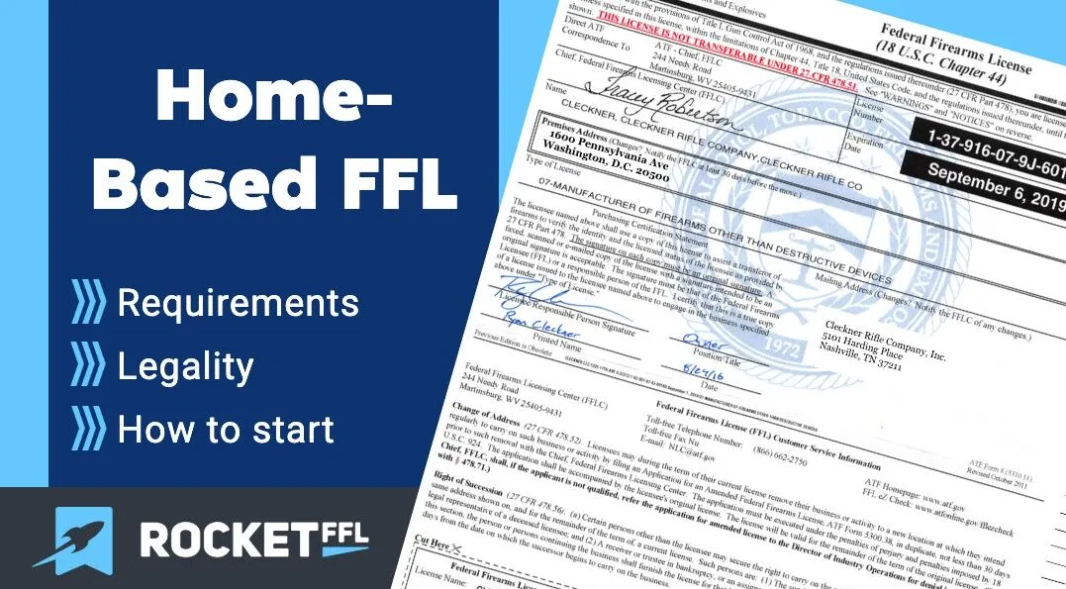
To learn more about this, you can also check out our article on How to Get a Home Based FFL
FFL Requirements for Businesses/Entities
In addition to the FFL requirements above, your business/entity must also meet some basic requirements before it can be a firearms business.
The simplest requirements are that your business/entity must be properly formed - i.e registered with your state, an employer identification number (EIN) if not a sole-proprietor, etc.
The biggest requirement, and the most difficult for some, is the business/entity's location. Simply, you must be permitted to conduct the business activity at the location you've chosen. These FFL location requirements vary depending on your state of residence.
Yes, you can get a home based FFL under federal law but your state may have special rules that prohibit it. For example, if you're living in an apartment building in New York city, you probably aren't going to get an FFL.
As long as your local zoning approves of you having a firearms license at the address you choose, then the ATF will give you a home based FFL ! There are a few tricks to getting your FFL at your home - I share all of these and more in the Get Your FFL Guide .
Thankfully, the ITAR requirements have changed (in a great way) and aren't a concern anymore for most people looking for ffl licensing.
State-level Requirements for FFLs
There are various state requirements for getting your FFL and also how you must run your FFL's day-to-day operations.
Both of these requirements are covered in our Get Your FFL course.
These state-level requirements involve knowing your local law and sometimes filing paperwork with your state police. For example, selling a handgun in Connecticut requires paperwork for the State Police.
As local law varies greatly, and can change quickly, we cover the major considerations in our course, but we can't cover everything.
If you are concerned about any of these, our member's area is a great resource and your ATF inspector from the BATF an be a great resource during your initial compliance inspection.
Don't panic about a compliance inspection - we walk you through all of this in our course.
And also, please don't think that you're on your own when it comes to local law. We do cover these as much as we can - just know that things can change quickly.
Business Intent FFL Requirement
In order to get an FFL from the ATF, you MUST have a business intent.
This may not be as big of a deal as you think but it's not minor either.
You do not have to have a business plan to open up a retail gun shop. But, you must have at least some business intent.
For example, "occasional sales" can work whereas "personal collection only" for firearm enthusiasts is not. In some cases, listing and selling some firearms online is enough - there is no minimum. The intent is what matters.
No intent to bring in some money with your FFL = no FFL for you. However, this does not mean that you have to be profitable.
Conducting an occasional firearm transfer (and charging an FFL transfer fee) can be enough.
FFL Requirements Take-Away
Meeting the requirements is only one part of getting your license. See our complete Get Your FFL Guide for the entire process from choosing your business model all the way through ATF approval.
FFL FAQ
Yes, in fact, most FFLs are home-based FFLs
No, you do not need an LLC, however, I recommend that you get one and use one.
No, you might not even be getting a dealers license (you may be manufacturing or cerakoting, for example) or you can sell out of any licensed location.
Yes, your state is likely to require a business license
In most cases, no. A felon can only get an FFL if they've had their firearm rights restored.
No, however, as I recommend in the Get Your FFL course, you should always try to have more than one Responsible Person (RP)
Yes, the ATF can deny your application but they mist have a valid reason for doing so.
No, you don't need insurance, however, it is recommended especially of you're manufacturing firearms.
No, there is no minimum requirement of firearms to sell. This is one of the biggest myths out there (second only to "The ATF can search whenever they want"). The only requirement is the intent to be engaged in the business. You could, for example, have a business gunsmithing and sell zero firearms.
Ready to get your FFL?
Step-by-step course from Ryan Cleckner — applications, compliance, and what ATF actually expects.
Get Your FFL Course →
I think what you are doing is amazing and im very grateful that you have posted so much useful information, I have been considering trying for my FFL for awhile just need to get the proper amount of money and the knowledge of when and where to go for it so thank you very much
You made my day! Glad to have helped. 🙂
Hi Im Jake,
I live in New Jersey and want to get a Home Based FFL.. I already have an online tactical business selling tac gear.
Can I do ONLINE SALES ONLY.. of firearms?
Do neighbors have to be notified of my FFL intent? Just wondering because I have a few neighbors who oppose it because I’m literally 100 yards from an elementary school.
Any assistance/advice will help.
Thank you
Great questions, Jake.
Yes, you can get an FFL for online sales only.
Your biggest hurdle will depend on your particular local zoning laws. There are special rules for being so close to a school that we cover in our course.
Notifying your neighbors is a requirement for some towns/cities but it is not a federal requirement.
I have a landscaping business license thru my home part time where I live. Can I add to my name something like “ gun sales and transfers” to my title?
You sure can. However, you should discuss this with your accountant to make sure it’s the best option for you.
Can I get a home ffl in MASS?
Can I get an ffl in a state that I do not reside in?
I do have an LTC in both states.
Yes, you can. But, you have to have a business presence in both states.
What is the requirement for storage of firearms for a home based ffl.
The requirements are less than you think – there are no specific “gun safe,” “alarm,” or other requirements. We cover what is required in our course.
I own a electroplating company and would like to get into replating in nickel and black oxide weapons for customers. Do i need an FFL to take in full dis-assembled weapons and replate them? Or should i say can i get an FFL to do so?
You can and probably do need one. You are at least gunsmithing and at most manufacturing.
I have been convicted of a felony many years ago and have been awarded a writ from record (expungement) and have regained my right to bear arms again. Would I be able to qualify for my ffl3.
I want to buy a Kel Tech tactical pump shotgun and the seller states this type shotgun requires an FFL. I’m not really looking to start a gun business. I read all the info on your site and I’m willing to pay the $200 fee for the FFL. How do I maneuver around the sales part?
How can I check my record
Can I get an FFL even though my discharge was an “OTH” (Other Than Honorable)? Not a dishonorable and not honorable.
Yes. A “dishonorable” discharge is what makes you a prohibited person.
Good morning, Mr. Cleckner
I am, right now, on your site and it has been very helpful to me.
Yes, I am considering getting a home-based FFL.
I do have a question concerning the date of this information, which is March 30, 2017, and that is:
Is your guidance current as of todays’ date, June 22, 2022?
Please advise.
Sincerely,
Robert McLaurin
Yes, we try to keep all of our information current. However, the most accurate information will always be in our courses as that takes priority over these blog posts.
Hi, what FFL do I need for lasering guns and making gun holsters. I already have a business license for manufacture of tactical gear of leather and webbing for corrections.
It depends on how you’re handling the layering business – you may be conducting a manufacturing step and thereby require a manufacturers license.
I’m a felon but, I have received my civil and gun rights back to me, can I get an FFL.
Yes. If your firearm rights have been restored, you should be good to go.
Ryan, I appreciate what you do. Your support and assistance of those who are passionate about our shared firearms heritage is more important than ever. Also, is there an email address to ask an individual question relating to FFL’s?
Kindly, J. Bell
support # is not valid 1-865-383-3635
If you’re a student of our courses, our Helpdesk handles all questions and issues.
Thank you so much for this I seen everything that I’ve been hearing what I had to do but this made it plain and simple!
Hi there, can a green card holder get an FFL?
Thank you
Yes, a green-card holder is a “US Person”